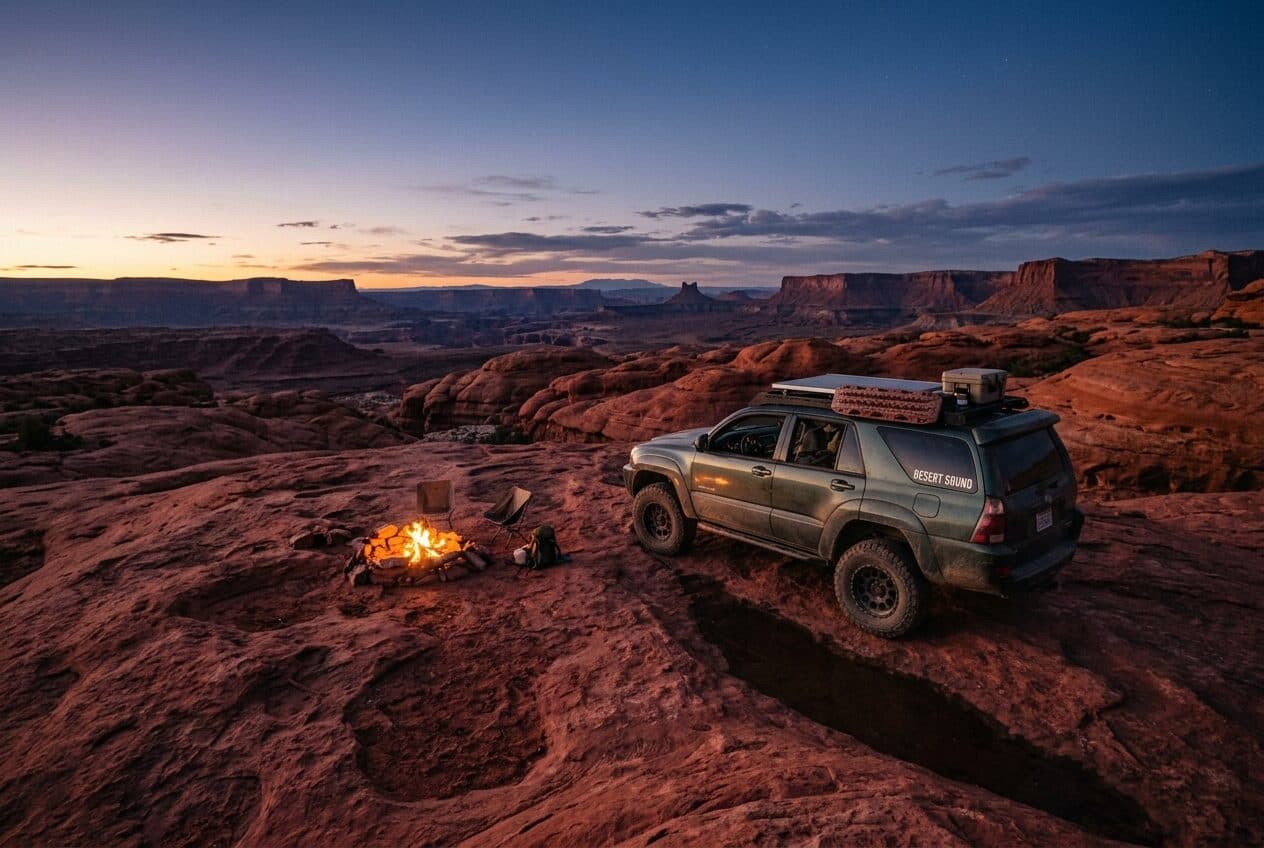
Most "best campsites" lists read like they were built from a map, not a memory. This one is the opposite problem, in a way — we're deliberately keeping it loose. Off-grid camping desert southwest trips reward flexibility more than a pin drop, and we'd rather point you toward the right region and access type than hand you coordinates we can't fully vouch for.
We're not going to publish exact GPS points here. Public land conditions change, access roads wash out, and a coordinate that was good last season isn't a promise for this one. What we can give you is honest description — terrain, access, what to expect — the same way we'd tell a friend before they load up the truck.
The best off-grid spots aren't secrets. They're just inconvenient enough that most people don't bother.
What "Off-Grid" Actually Means Out Here
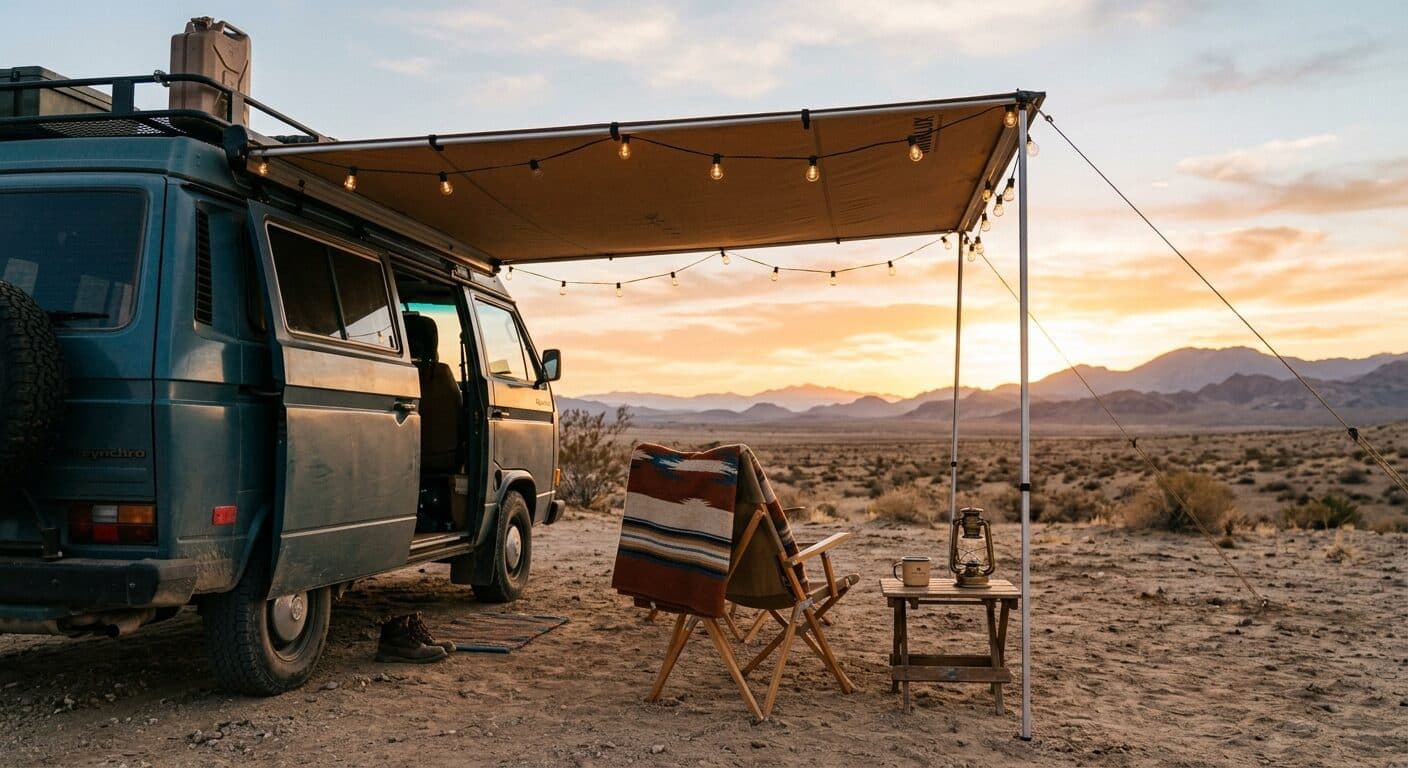
No hookups, no cell signal in most cases, and often a stretch of unmaintained road between you and the nearest pavement. That's the trade — solitude in exchange for self-sufficiency.
- Bring more water than you think you need
- Check current land management alerts before you go, not the week before
- Tell someone your general route and expected return
The Seven Spots
1. High Desert Plateau Camping, Northern Arizona
Elevation brings relief from summer heat here, with scattered juniper for partial shade and enough space between camps that you rarely see another rig. Access is via graded dirt roads that get rougher the further you push in — a stock high-clearance vehicle handles it fine in dry conditions.
2. Canyon Rim Dispersed Sites, Southern Utah
Red rock rim camping with long sightlines and dramatic sunsets, reached by a mix of paved and washboard dirt road. Wind is the real consideration here — stake everything down, and know that shade is scarce midday.
3. Basin Floor Sites, New Mexico
Wide-open basin terrain, minimal vegetation, and some of the darkest night skies in the region. The trade-off is total exposure — no natural windbreak, so this one's better suited to calmer weather windows.
Some of these spots aren't beautiful in the postcard sense. They're beautiful in the nobody-else-is-here sense.
4. Foothill Sites Near a Seasonal Wash, Southern Nevada
Camping near a dry wash offers some elevation change and natural windbreak from low ridgelines, but requires real caution around flash flood risk if storms are anywhere in the forecast — check conditions before committing to a wash-adjacent site.
5. Mesa Top Dispersed Camping, Western New Mexico
Flat mesa-top access with 360-degree views and reliable dirt road access most of the year, though the final stretch can get soft after rain. High-clearance recommended; low-clearance vehicles should scout on foot first.
6. Desert Scrub Flats, Eastern Arizona
Low-key, easy-access sites in open scrub terrain — less dramatic scenery, more reliable access, which makes this a good option when road conditions elsewhere are questionable.
7. High-Elevation Pine Pocket, Southern Colorado Border Region
A cooler-weather option when the lower desert is unbearable, with actual tree cover and a noticeable temperature drop after dark. Access road quality varies significantly by season — this one's a late-spring-through-fall option, not a winter plan.
How We Actually Choose Between Them
Weather, road conditions, and how much solitude we're after that particular week — in that order. A spot that's perfect in October can be a bad idea in July, and dispersed camping regulations shift by land management area, so we check current rules every time rather than assuming last trip's information still holds.
- Check the relevant land management agency's current dispersed camping guidance
- Check recent weather, especially for wash-adjacent or exposed sites
- Fuel and water up fully before leaving pavement
Gear That Actually Earns Its Spot
None of these trips require much. What they do require holds up to dust, sun, and repeated loading and unloading — which is most of the reasoning behind keeping a canvas tool roll permanently staged in the truck instead of packing gear fresh each time.
Why We Keep Going Back
These aren't the most photogenic spots in the Southwest, and that's on purpose. We return to them because they're quiet, because the access is honest about what it takes to get there, and because that inconvenience is doing most of the work of keeping them uncrowded.
That's the whole appeal of a micro-adventure — you don't need a two-week expedition to feel the reset. A weekend, a decent map, and the discipline to check current conditions before you commit is most of it.
If you're staging a truck for regular trips like these, keeping it loaded and ready before you know which weekend you're headed out is half the battle — a topic worth its own write-up down the line.